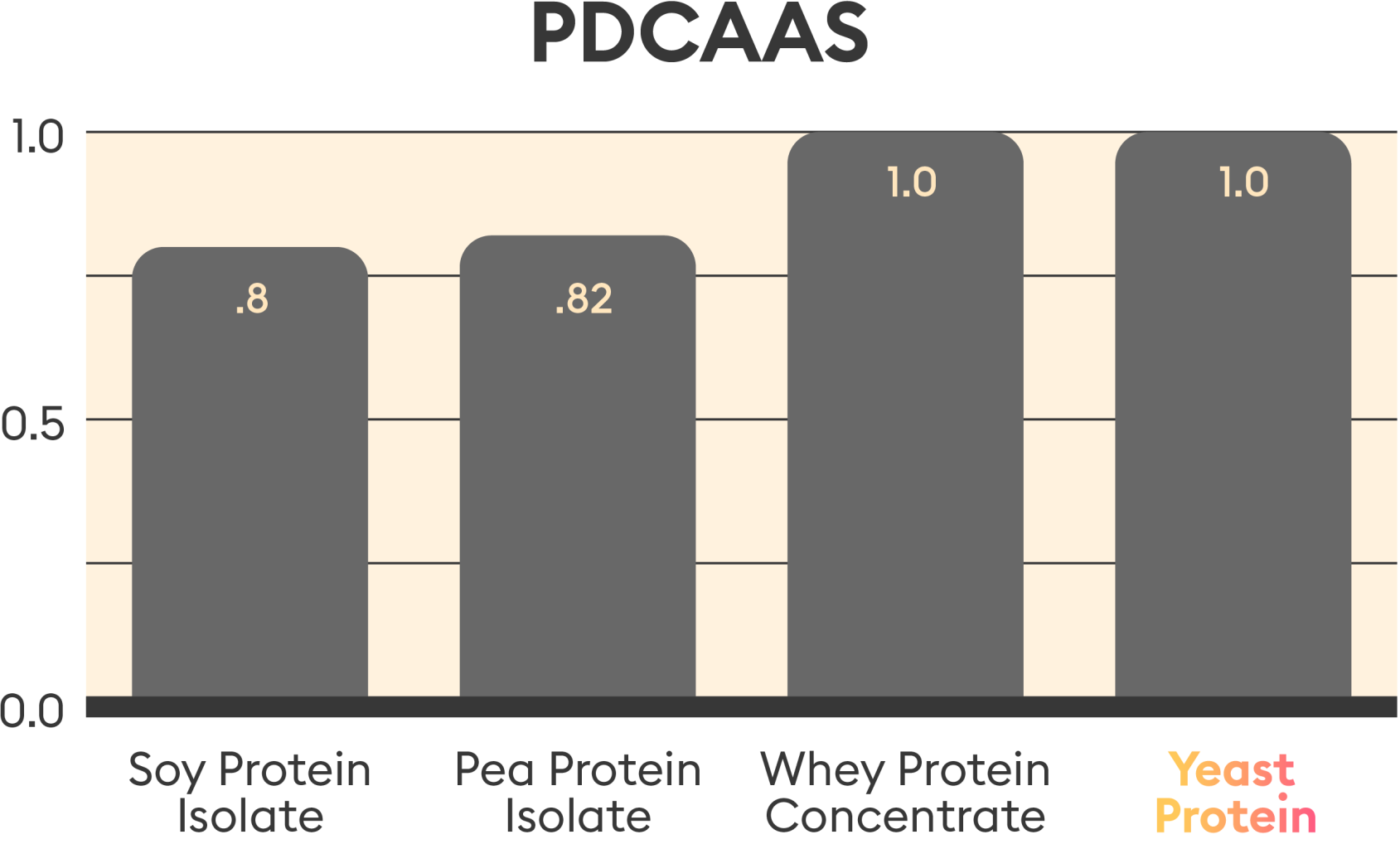
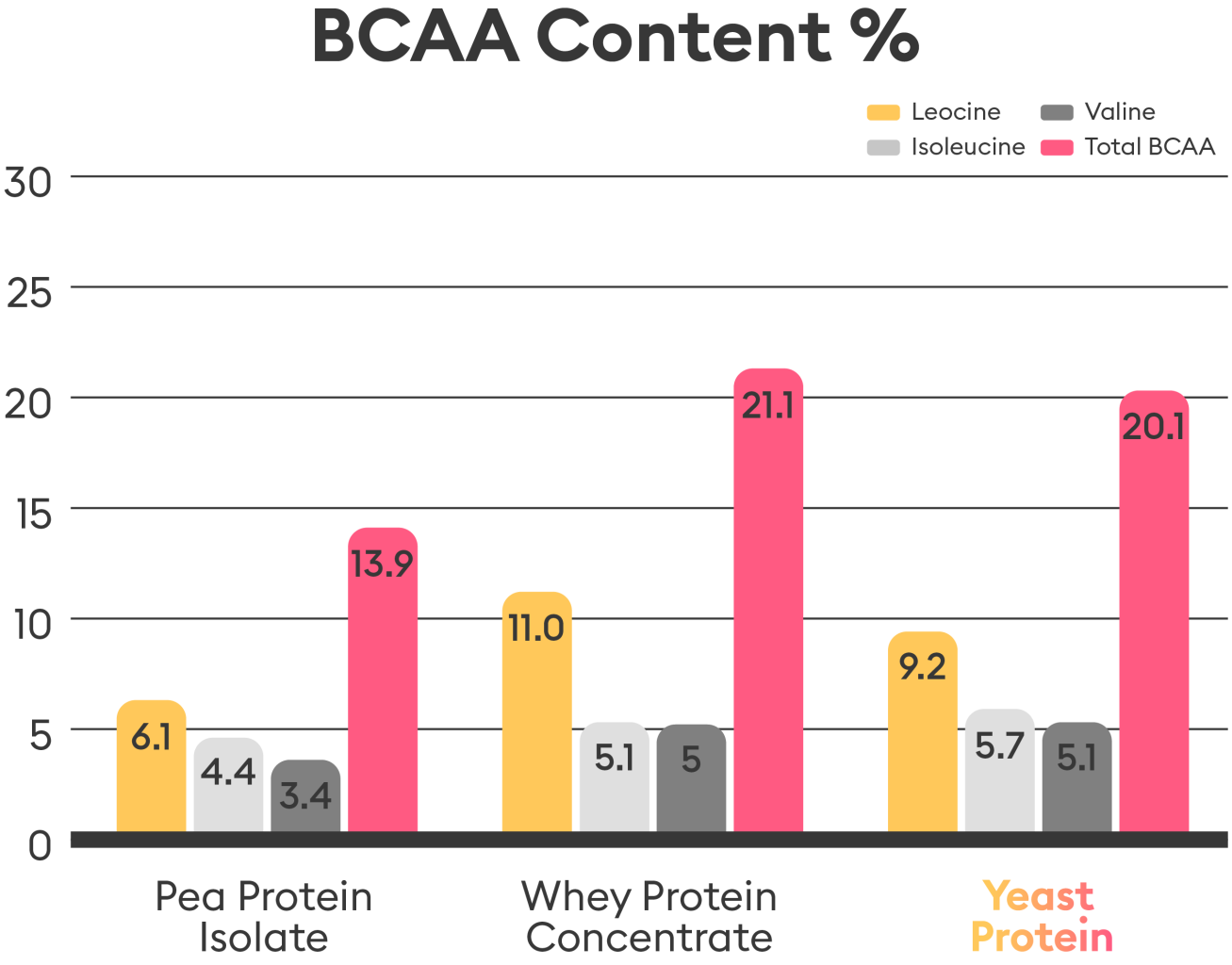
Yeast Proteinis high in Branched Chain Amino Acids, which when broken down are converted into glucose, preventing muscle loss and promoting muscle recovery after exercise.1
Experimental results showed that Yeast Protein contains ≥20.0% BCAA, higher than PPI and comparable to WPC.
Yeast Protein is an excellent protein for sports nutrition and an aging population, to support muscular recovery and reduce muscular fatigue/loss.
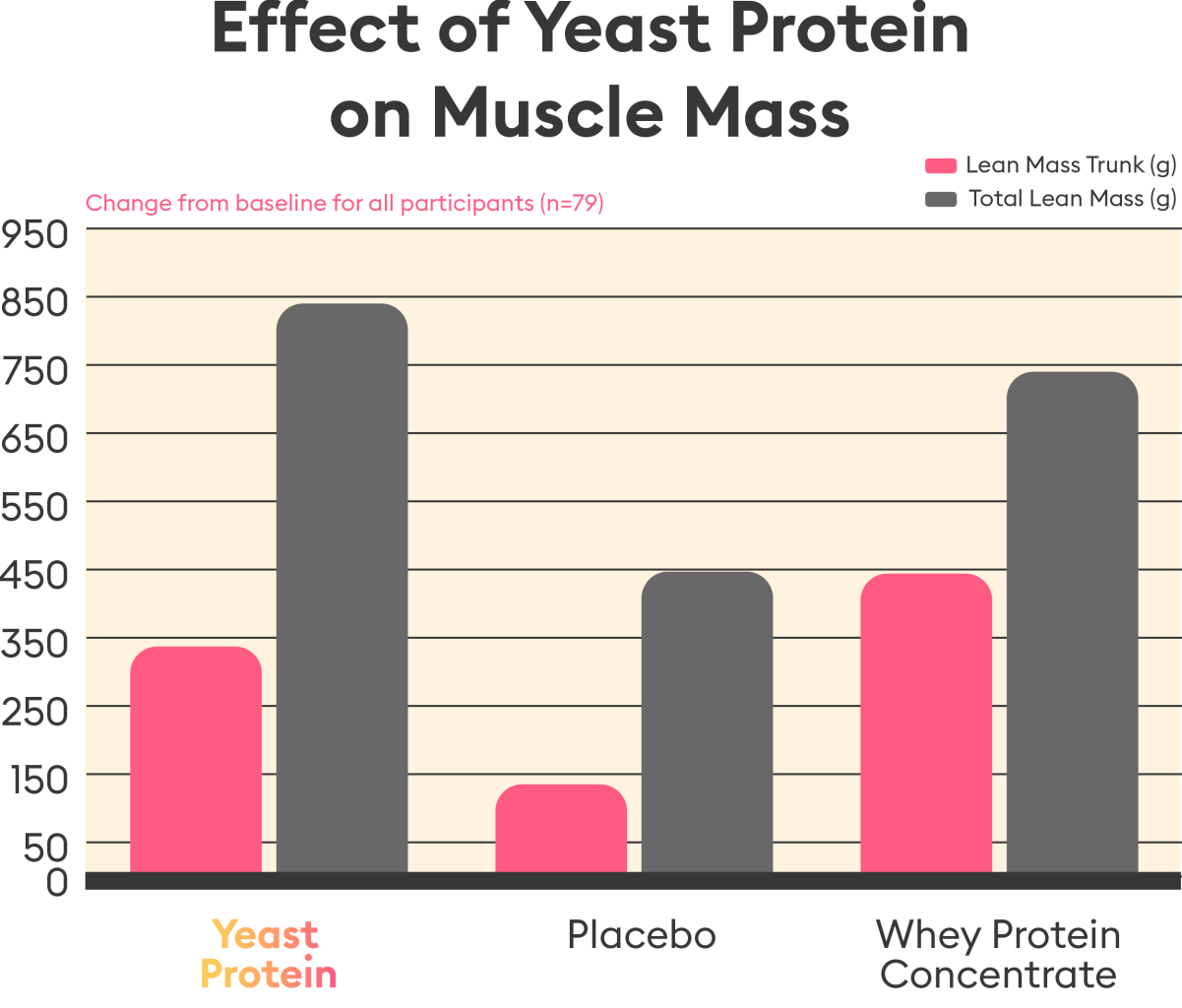
Yeast Proteinincreases lean muscle mass, strength, and endurance (when consumed twice per day at 20 grams per dose for 8 weeks) when combined with exercise in an aging population (40+ older).5
Yeast Protein improves muscle morphology, muscle strength, increase muscle size and reverses muscle loss when combined with resistance training (Recommended Dosage: 1g/kg body weight per day for 3 months).3
Participants: 116 healthy adult males aged 40+ were recruited, with 79 completing the study.
Intervention:Participants were randomly assigned to consume 40g of either Yeast Protein, whey protein, or a placebo (maltodextrin) twice daily for 8 weeks.
Exercise Regimen: Participants engaged in resistance training three times a week.
Measurements:Body composition (via DEXA scans), muscle strength, and endurance were assessed at baseline, week 4, and week 8.
Results
Yeast Protein is an effective and sustainable alternative to whey protein for improving lean mass, strength, and endurance in adults, particularly those with low protein intake.5
The Yeast Protein and whey protein groups increased lean trunk mass and total lean mass from baseline.5
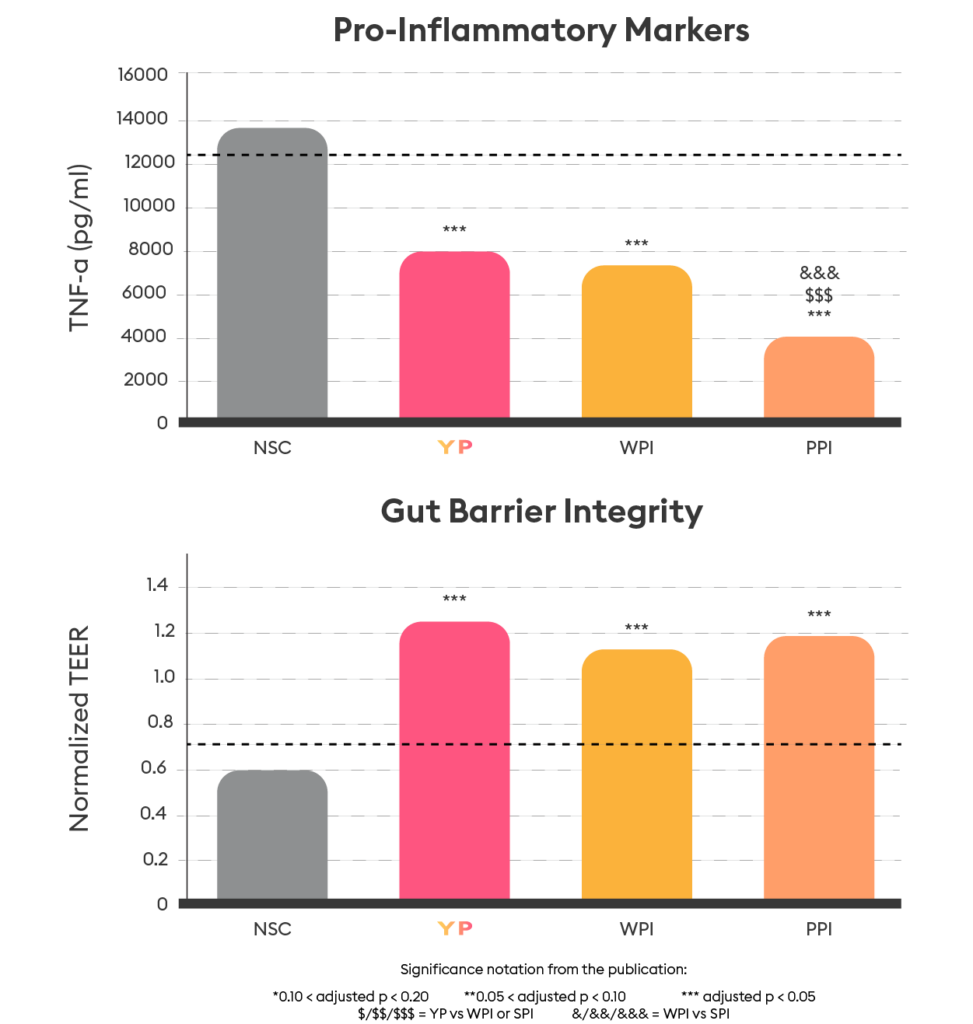
*Results are based on a preclinical ex vivo model using human donor microbiota. Additional human clinical studies are needed to confirm these effects in consumers.
Gut Health
Methodology
Study Model: A preclinical ex vivo SIFR® study compared yeast, whey, and soy proteins following simulated digestion.
Donor Samples: Gut microbiota were collected from six healthy men aged 50–65.
Intervention: Proteins were tested at an amount modeled to represent 40 g per day, alongside a no-substrate control.
Measurements: Researchers assessed microbial changes, metabolites, gas production, inflammatory markers, and gut-barrier integrity over 24 hours.
Results
Yeast protein produced the strongest gut-barrier response among the three protein sources, as indicated by increased TEER in the ex vivo host–microbiome interaction model.6
Yeast and soy proteins produced the largest increases in the study’s combined community-modulation score, suggesting broader stimulation of the donor microbiota. Yeast protein also promoted butyrate-associated microbial activity.6
Yeast protein generated less gas relative to total SCFA production than whey or soy protein, suggesting a potentially more favorable fermentation profile in this ex vivo model.6
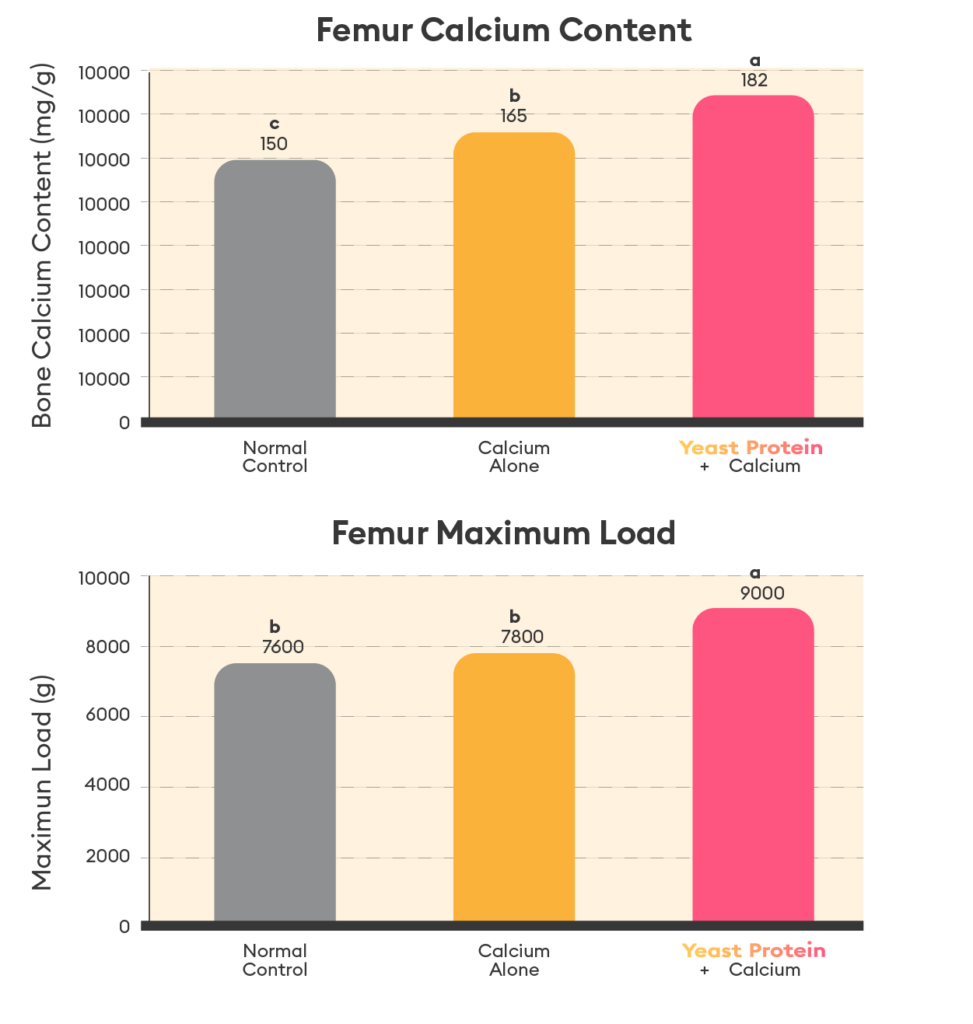
Yeast Protein may support calcium absorption and retention, helping improve how calcium is utilized within the body.7
Research found that combining Yeast Protein with calcium supported bone calcium content, bone formation markers, and biomechanical strength.
Yeast-derived proteins may help bind calcium and support its sustained release, creating potential for use in calcium-fortified and healthy-aging formulations.7
These findings suggest YESTEIN® is a promising protein ingredient for future bone-health and healthy-aging formulations.7
*Findings are based on a 2025 preclinical animal study. Human clinical research is needed to confirm these effects.
1 Xiaoqiao TANG; Yu WU; Jun FAN; Wenxiang YANG; Bolin FAN. Nutritional evaluation of yeast protein / 公共卫生与预防医学. Journal of Public Health and Preventive Medicine; (6): 100-104, 2020
2 Chen Zhixian, Zhang Haibo, Zhang Shuangqing, Zhang Yan. Study on the amino acid composition and in vitro dynamic digestion of three kinds of proteins from differentsources. Journal of Henan University of Technology (Natural Science Edition); Vol 40 (2); April 2019.
3 Yuxiao Liao et. al. Muscle aging amelioration by yeast protein supplementation was associated with gut microbiota. The Journal of Functional Foods. January 07, 2022:89: Elsevier 104948. https://doi.org/10.1016/j.jff.2022.104948.
4 Chengxin Ma, Songgang Xia, Jian Song, Yukun Hou, Tingting Hao, Shuo Shen, Ku Li, Changhu Xue, Xiaoming Jiang, Yeast protein as a novel dietary protein source: Comparison with four common plant proteins in physicochemical properties, Current Research in Food Science, Volume 7, 2023.
5 D Briskey, RA Skinner, and A Rao, “Effect of Yeast Protein on Muscle Mass and Performance in an Adult Population – a Double Blind, Randomised Controlled Trial.” Journal of Food and Nutrition Research, vol. 12, no. 5 (2024): 292-300. doi: 10.12691/jfnr-12-5-9
6 Van den Abbeele, Pieter, Lam Dai Vu, Jonas Poppe, Ingmar A. J. van Hengel, Aurélien Baudot, Yan Zhang,
Zhixian Chen, and Jun Yan. “Yeast Protein Modulates Metabolites Derived from the Human Gut Microbiota
of Older Male Adults ex Vivo to Strengthen Gut Barr ier Function and Reduce Inflammation.” Frontiers in
Microbiology , vol. 16, 2026, article 1697734. doi:10.3389/fmicb.2025.1697734.
7 Liang, Yu, Qian Cheng, Zhixian Chen, and Tao Hou. “Effects of Yeast Protein on the Promotion of Intestinal
Calcium Absorption (in Vivo/in Vitro) and Bone Formation (in Vivo) in Rats Fed by Normal and Low -Calcium
Diets.” Food Research International , vol. 220, 2025, article 117179. doi:10.1016/j.foodres.2025.117179.
We use cookies to ensure that we give you the best experience on our website. If you continue to use this site we will assume that you are happy with it.